
Ultimate corrosion protection
NanoGalv has redefined zinc nickel corrosion protection. Tests demonstrate salt spray performance exceeding 3,000 hours to the ASTM B117 standard – but, in fact, further testing has shown protection of more than 10,000 hours under certain conditions.
This is achieved by utilising ground-breaking nanolaminate technology, which is the building up of nano scale zinc nickel sublayers to create unmatched component durability.
It’s this application process that means NanoGalv can deliver industry-leading corrosion resistance without the need for thick coatings. This is particularly valuable for precision engineered components, threaded fasteners and applications where dimensional tolerances are important.
Improved longevity of parts and reduced maintenance
NanoGalv’s impressive corrosion protection capability results in greater periods between maintenance and, ultimately, cost savings for the end user.
For industries such as rail, oil and gas, and aerospace, this is a huge advantage. Flying to offshore platforms to replace components such as flanges bolts can cost extraordinary amounts of money, so longer-lasting components, even in the harshest environments, can make a significant difference.
Quality corrosion protection can also reduce downtime and reduce labour, supporting lower whole-life costs.
Environmental sustainability
NanoGalv is completely PFAS-free, helping customers seeking to reduce reliance on substances of concern. Meanwhile, the technology can also be used to replace traditional coating systems that use toxic cadmium and hexavalent chromium, helping limit or even eliminate usage of these harmful chemicals.
The NanoGalv application process is also less energy intensive than other plating processes, producing further carbon reduction benefits, while less coating material is used due to the ultra-thin layers.
Perhaps most significantly, extended component lifespan means a reduced need to manufacture replacements and less industrial waste.
Reduced risk of hydrogen embrittlement
Hydrogen embrittlement is a major consideration when protecting high-strength steel components. It occurs when hydrogen enters the metal, making it brittle and increasing the risk of cracking or sudden failure under stress.
For fasteners used in rail, construction and other demanding industrial environments, this can be a serious concern because component failure can affect safety, reliability and service life.
Tests have shown that hydrogen embrittlement risk has been reduced in certain component applications compared with conventional electroplating processes.
Appearance
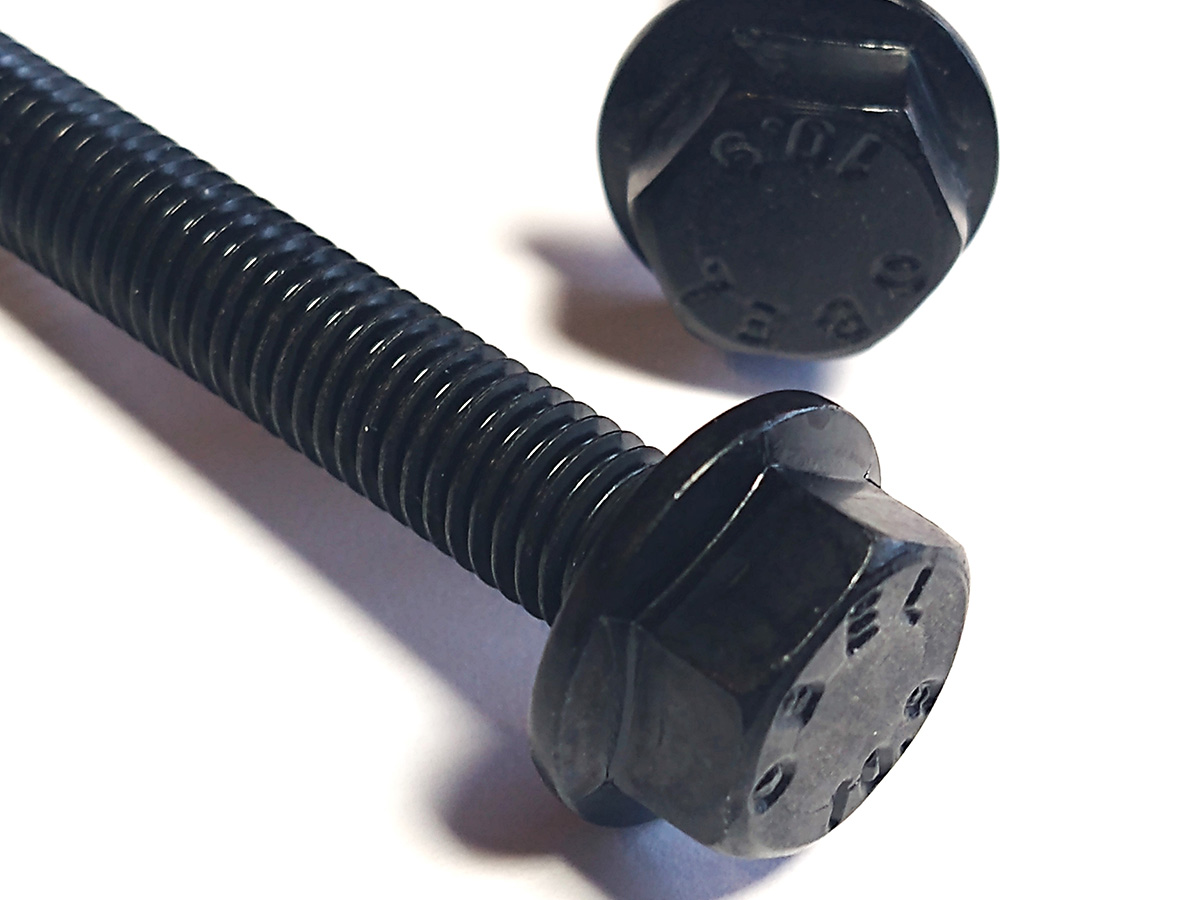
NanoGalv can be developed with a consistent, deep black finish. Unlike conventional zinc-nickel coatings, which can develop uneven colouring or brown and grey tones during black passivation, NanoGalv can deliver a uniform, premium-quality appearance across production batches.
This makes it particularly useful for visible fasteners and components where aesthetics matter alongside performance, including automotive, rail and architectural applications.
The consistent finish can also reduce the need for additional colouring or cosmetic treatments, depending on the specification and application.
Treated components can also be developed with a silver appearance.
Ductility
Ductility is a material’s ability to bend under stress without breaking. This matters when talking about coatings because a protective layer needs to remain intact when the component underneath it bends, stretches or changes shape.
NanoGalv offers greater ductility than conventional electroplated zinc-nickel coatings. This is important for a variety of parts, including fasteners under high mechanical load and parts that are stressed during assembly, such as rivets, tubes and formed components.
Controlled surface friction
NanoGalv enables manufacturers to tailor the coefficient of friction (CoF) of a plated surface to meet specific application requirements by adjusting the current density used during the plating process.
Through waveform modulation, the process controls crystal growth, allowing friction characteristics to be managed with greater precision and consistency. This gives manufacturers greater control over the finished surface and can remove the need for multiple coating layers to achieve a specified CoF.
For fasteners and other assembled components, controlling friction is important because it influences the relationship between tightening torque and the clamping force generated. More consistent friction characteristics can therefore help manufacturers achieve more predictable assembly results.